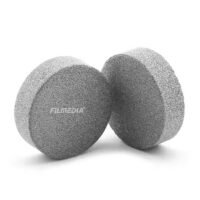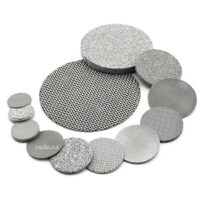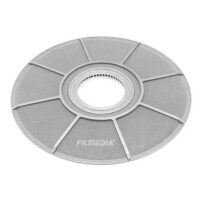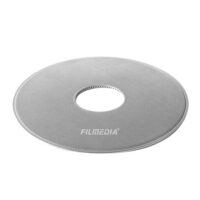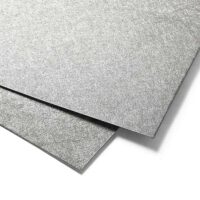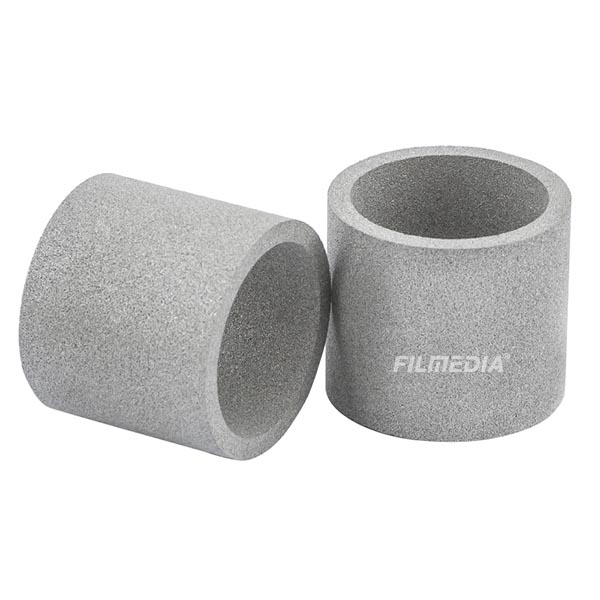
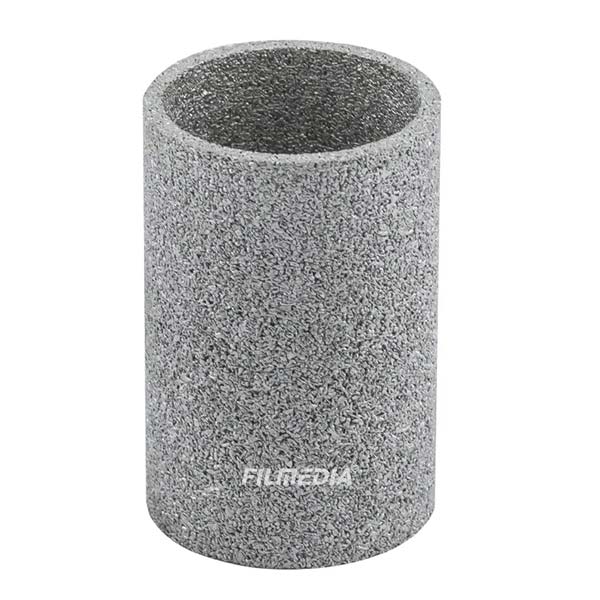
Filmedia® supplies high-quality CE certified sintered power filter tubes that can be customized to suit a variety of applications and specifications. Tubes can be designed with different inner and outer diameters, heights, and pore sizes.
- Inner Diameter: 4.0-220mm.
- Outer Diameter: 1.0-210mm.
- Height: 2.0-100mm.
-
Thickness: 0.6-10mm.
- Filtration Range: 0.1μm-50μm.
Description
Powder sintered filter tubes are high-performance filter elements made from stainless steel powder. After being pressed into a tubular blank using precision dies, they undergo a high-temperature sintering process. Utilizing unique powder metallurgy technology, every production step, from raw material selection to finished product delivery, is rigorously controlled. This includes particle size grading and purity testing of the stainless steel powder, pressure control during die pressing (to ensure uniform density), and the temperature profile during the high-temperature sintering stage (typically maintaining a precise temperature ramp rate and holding time between 1100-1300°C). These meticulous processes ensure the filter tubes’ uniform pore structure and stable physical properties, laying a solid foundation for efficient filtration.
Product Features
Sintered stainless steel powder filter tubes, leveraging their material properties and process advantages, offer a range of exceptional performance:
- Extremely high mechanical strength and pressure resistance
The stainless steel powder forms a strong metallurgical bond during the high-temperature sintering process, enabling the filter element to withstand high operating pressures (typically 0.6-3 MPa, with special models exceeding this) without the need for additional support. This makes the filter element less susceptible to deformation and cracking in high-pressure filtration applications and adapts to pressure fluctuations under complex operating conditions.
- Optimized surface structure for backflow cleaning
The filter element surface undergoes a special treatment process to create a pore distribution that is ideal for backflow cleaning. When backflow cleaning methods such as backflushing and backwashing are used, water or air flow more efficiently flushes impurities from the surface and internal pores. Cleaning is simple and convenient, and the filtration performance recovery rate after cleaning can exceed 90%, significantly reducing maintenance costs.
- Comprehensive Environmental Resistance
Stainless steel (such as 316L) possesses excellent corrosion resistance, withstanding long-term attack from a variety of corrosive media, including acids, alkalis, and salts. It also offers exceptional high-temperature resistance. Conventional models can operate for extended periods at 600°C, while specially treated filter elements can even withstand temperatures exceeding 800°C.
- Precise and Stable Filtration
The filter element boasts a uniform pore size distribution. By adjusting the particle size of the stainless steel powder (e.g., from micron to submicron) and the sintering process conditions (e.g., temperature and holding time), filter elements can achieve filtration accuracies ranging from 0.1μm to 100μm, meeting the precise filtration needs of various scenarios. Furthermore, its high porosity (typically 30%-50%) provides excellent air permeability, low fluid resistance, and stable filtration throughput.
- Excellent Processing Adaptability
The filter element can be machined through welding, cutting, drilling, and other processes, making it easy to assemble into various filter components based on specific equipment requirements. Furthermore, its structural stability ensures that no particles are lost during processing and use, preventing secondary contamination.
Performance
|
Filtering precision
(um)
|
Max aperture
(um)
|
Permeablility
(m³/h.m2.Kpa)
|
Compressive strength
(Mpa/cm2)
|
|
0.2
|
2.5
|
1.5
|
3
|
|
0.5
|
4
|
3
|
3
|
|
1
|
6
|
5
|
3
|
|
2
|
10
|
15
|
3
|
|
5
|
15
|
40
|
2.5
|
|
10
|
30
|
120
|
2.5
|
|
20
|
60
|
250
|
2.5
|
|
30
|
100
|
500
|
2.5
|
|
50
|
160
|
800
|
2.5
|
Applications
Porous metal powder sintered tubes are widely used in gas-liquid filtration and separation scenarios across various industries.
- Chemical Industry: Used for catalyst recovery, fine filtration, and decarbonization of reaction materials
- Pharmaceutical Industry: Used for sterilization, filtration, and purification of pharmaceutical solutions and intermediates.
- Food and Beverage Industry: Used for clarification and filtration of beverages, liquor, mineral water, and vegetable oils, removing impurities and microorganisms.
- Metallurgy and Petroleum Industries: Used for oil product desanding, oilfield reinjection water filtration, and oil and gas purification.
- Environmental Protection: Used for treating dust in industrial waste gas and suspended solids in wastewater.