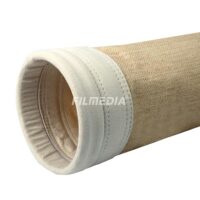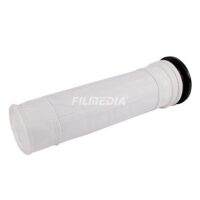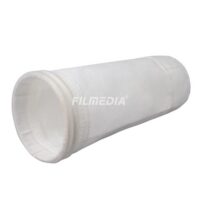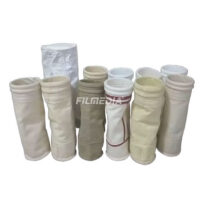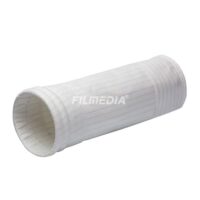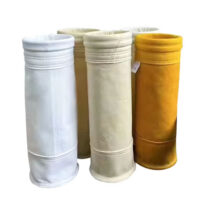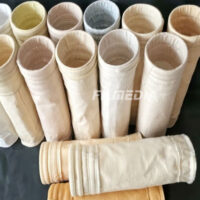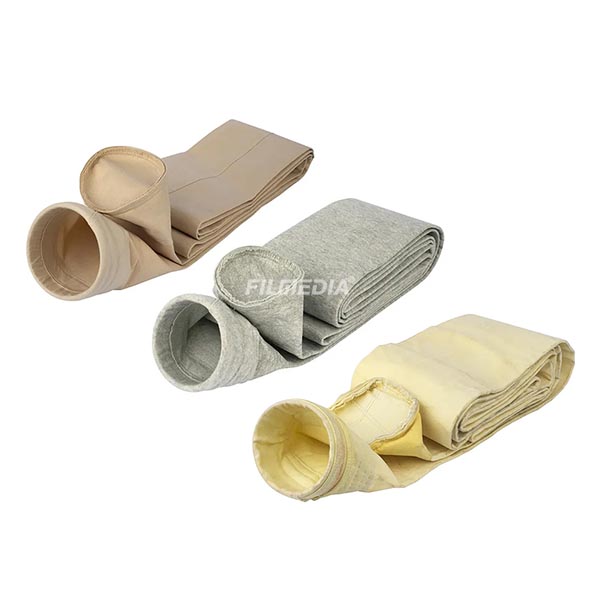
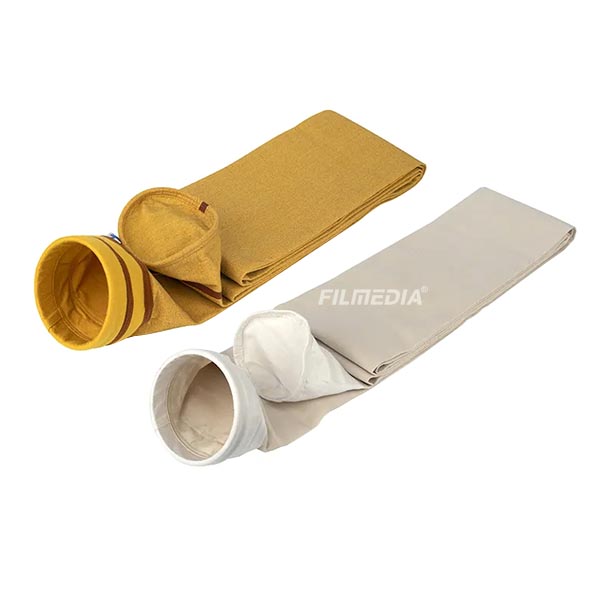
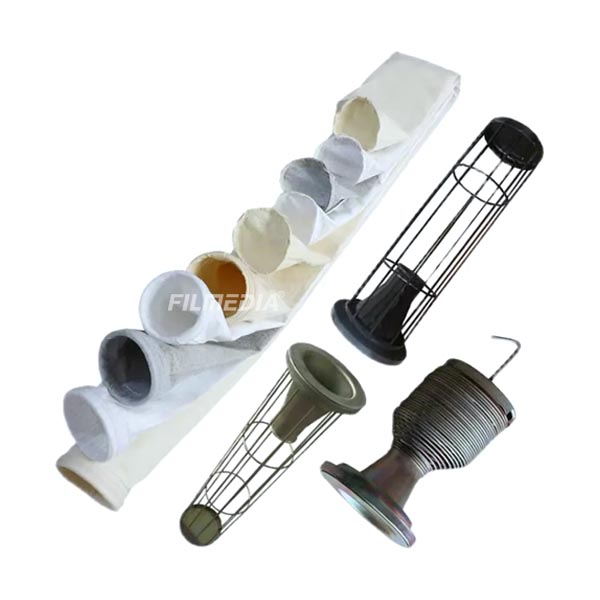
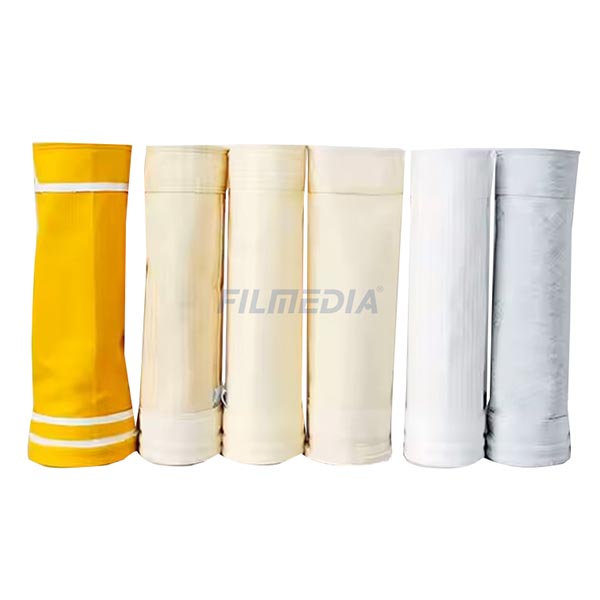
Shaker filter bags offer significant advantages in small-scale industrial dust collection and in handling larger dust particles, thanks to their simple structure, gentle cleaning, and easy maintenance. Shaker dust collectors are currently widely used in industry as highly efficient dust removal devices. They effectively remove dust particles from the air by combining electrostatic precipitation with rapping, thereby improving the environmental protection standards of industrial production.
Description
Working Principle of Shaker Filter Bags
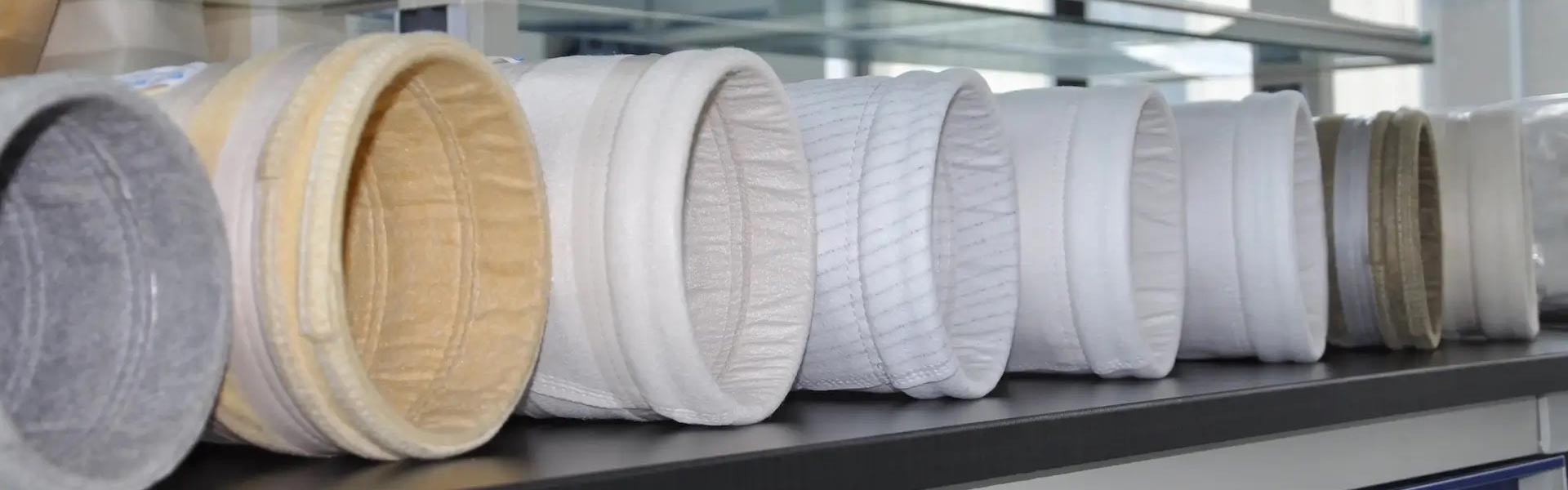
Shaker filter bags are a type of dust collection technology that relies on mechanical vibration for cleaning. Their working principle involves generating periodic vibrations in the filter bags, either during operation or when the dust collector is offline, causing the dust adhering to the bag surface to loosen and fall off. Common vibration methods include top vibration, middle vibration, and bottom vibration. Shaker cleaning ensures effective dust removal while minimizing secondary dust emission, making it especially suitable for handling fragile or larger dust particles.

Dust Removal Process
Air enters the dust collector through the inlet and is evenly blown downwards by the distribution plate above the filter bags. Dust particles are deposited in the filter bags along with the air, while clean air is discharged from the top of the filter bags through the outlet duct. As the dust collector operates, dust particles continuously adhere to the surface of the filter bags, gradually increasing the filter bag resistance and affecting airflow and dust removal efficiency. Therefore, it is necessary to periodically shake and clean the dust, that is, to shake off the dust particles adhering to the surface of the filter bags, allowing the dust to fall into the dust collection box below, restoring the surface of the filter bags to a clean state, thereby maintaining the normal operation of the dust collector.
Why Choose Shaking for Dust Removal?
- Simple and Efficient
Shaker filter systems have a relatively simple structure and do not require complex pulse jet systems or compressed air equipment. They mainly consist of a mechanical vibration device and a transmission mechanism, resulting in lower manufacturing and maintenance costs.
- Gentle Dust Cleaning
For delicate or easily broken dust, mechanical vibration provides a gentle cleaning method, avoiding filter bag damage or secondary dust release caused by strong impacts.
- Easy Maintenance
The vibration mechanism is structurally simple, making routine maintenance and repairs easier, thereby reducing long-term operational costs.
Advantages of Needle Felt Dust Collection Filter Bags
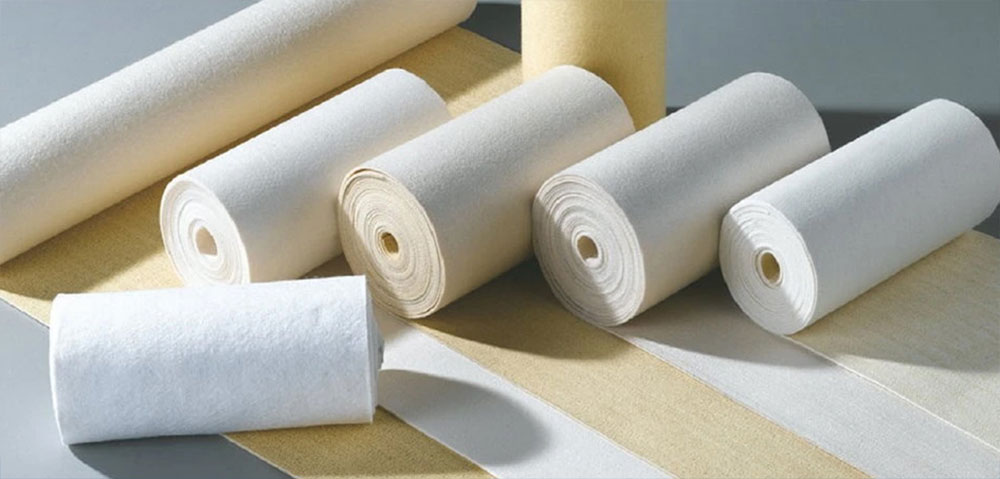
Needle-punched felt filter fabric is a nonwoven fabric manufactured through a needle-punching process and is widely used for air, liquid, or gas filtration. Its main features are its strong mechanical strength and high filtration efficiency, making it particularly suitable for dust collection applications in various industrial fields.
1. High Filtration Efficiency
Needle felt features a three-dimensional, interlaced structure with high porosity. The fibers create a complex “maze effect” that effectively captures fine dust particles.
Post-treatments such as calendaring, singeing, or membrane lamination further enhance surface smoothness and filtration precision, achieving 1–5 micron level efficiency.
2. Balance of Air Permeability and Pressure Drop
The evenly distributed pores between fibers allow needle felt to maintain good air permeability while ensuring high filtration efficiency.
Under the same airflow, needle felt filter bags exhibit lower operating resistance, reducing fan energy consumption and extending service life.
3. Excellent Dust Release Performance
With surface treatments like singeing or heat-setting, dust is less likely to penetrate deep into the fiber layer, making it easier to remove during cleaning and reducing the risk of clogging.
Suitable for various cleaning methods, including mechanical shaking, reverse air, or pulse-jet cleaning.
4. Temperature and Chemical Resistance
Standard polyester (PE) needle felt can withstand continuous operating temperatures of about 130–150℃.
Advanced materials such as PPS, aramid, P84, and PTFE needle felts can handle 200–280℃ high-temperature flue gas, meeting diverse industrial requirements.
Strong resistance to acids, alkalis, and oxidation makes it suitable for complex gas conditions in industries like chemicals, cement, metallurgy, and power generation.
5. High Mechanical Strength and Long Service Life
The interlaced and tightly bonded fibers give needle felt excellent tensile strength and dimensional stability.
Filter bags resist tearing and deformation under high air velocity, with a typical service life of 1–3 years, lowering maintenance costs.
6. Flexible Customization
Can be tailored to various dust collector models with different diameters, lengths, and top/bottom configurations.
Surface treatments such as PTFE membrane lamination, antistatic fiber blending, or water/oil repellent finishing are available to meet specific dust and process requirements.
Materials & Properties of Dust Collector Filter Bags
Filmedia® provides customized filter media in various categories, precisely matching the dust characteristics and working conditions of different industries
| Material | Working Temperature |
Instant Temperature | Abrasion Resistance | Hydrolysis Resistance | Acid Resistance | Alkali Resistance | Oxidation Resistance |
| Polyprolene Needle Felt | 90℃ | 110℃ | Good | Excellent | Excellent | Excellent | Middle |
| Acrylic Needle Felt | 120℃ | 130℃ | Middle | Good | Good | Middle | Good |
| Polyester Needle Felt | 130℃ | 150℃ | Excellent | Poor | Middle | Fair | Good |
| PPS Needle Felt | 180℃ | 200℃ | Good | Excellent | Excellent | Excellent | Fair |
| Aramid Needle Felt | 204℃ | 220℃ | Good | Middle | Middle | Good | Middle |
| P84 Needle Felt | 240℃ | 260℃ | Good | Middle | Middle | Middle | Good |
| PTFE Needle felt | 250℃ | 280℃ | Good | Excellent | Excellent | Excellent | Excellent |
| Fiberglass Needle Felt | 250℃ | 280℃ | Fair | Good | Middle | Fair | Good |
Application scenarios
- Industrial environments with larger, less sticky dust particles.
- Situations where intensive dust cleaning is not required.
- Small-scale dust collection systems, such as grain processing, woodworking, and metal processing.
- Enterprises looking to reduce equipment maintenance costs.
Choose Filmedia®
Filmedia®, a professional manufacturer of dust collector filter bags, focuses on providing customized filter bag solutions for pulse jet, reverse air, and shaker dust collector systems. Leveraging advanced production equipment, high-quality raw materials, and optimized structural design, Filmedia® filter bags offer superior filtration efficiency, stable operating performance, and extended service life. Our products meet the needs of various industrial conditions, maintaining reliable and stable filtration performance even under high dust loads, varying temperature conditions, and complex chemical environments. With solid technical capabilities and a rigorous quality control system, Filmedia® is committed to providing global customers with cost-effective, durable, and reliable industrial filtration solutions.