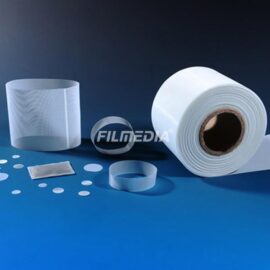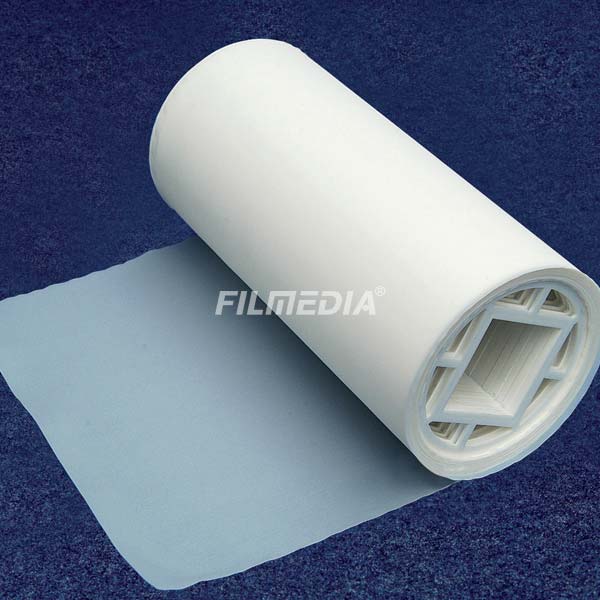

Polyethylene (PE) filter mesh is a type of woven or extruded filter material made from polyethylene (PE) fibers. It is widely used in industrial, commercial, and laboratory filtration applications for its chemical resistance, mechanical strength, and lightweight properties.
- Material: Polyethylene (PE).
- Structure: Monofilament or multifilament woven mesh.
- Chemical Resistance: Resistant to acids, alkalis, and most solvents.
- Temperature Range: Typically -60°C to 80°C (depends on grade).
- Weave types: Plain Weave (PW) and Twill Weave (TW).
Description
Weave types
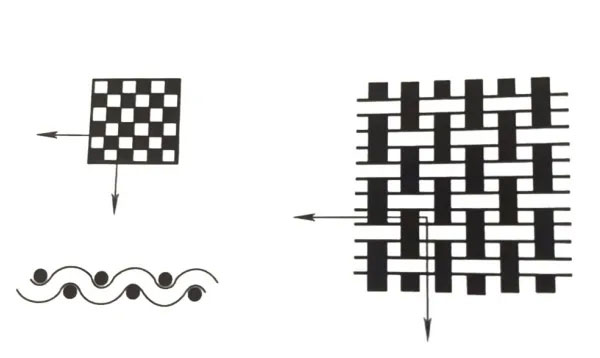
- Plain weave
Plain weave is the simplest among textile structures, created by interlacing the warp and weft yarns alternately. This structure provides numerous crossing points, resulting in well-regulated, highly durable fabrics with excellent resistance to friction. Because the warp and weft yarns appear uniformly on both the front and back surfaces, it is often difficult to distinguish the front from the back, unlike in other weave structures.
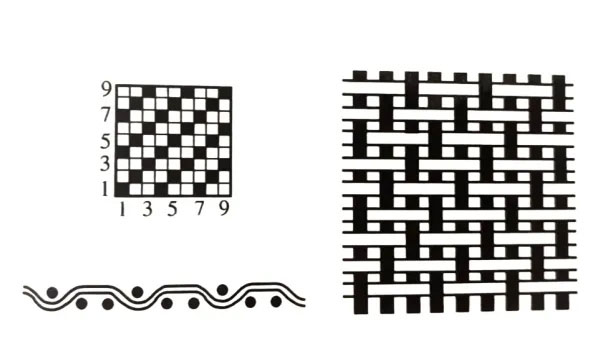
- Twill weave
Twill weave is formed by intersecting the warp and weft yarns, with each yarn passing over or under two or more opposing yarns, creating a distinctive diagonal pattern known as the twill line. Compared to plain weave, twill fabrics are slightly less durable but more flexible and possess a glossier texture, as the warp yarns float over a larger surface area. With fewer interlacing points, twill allows the production of high-density fabrics with minimal gaps. Variations such as 2/2, 2/1, and 3/1 twill weaves—where the weft crosses over and under different numbers of warp yarns—enable a wide range of structures and textures that are not achievable with plain weave.
Specifications
| Mesh Count | Mesh Count | Thread Diameter | Mesh opening | Open area | Thickness | Theoretic ink volme | Suggestion Highest Tension |
| (mesh/cm) | (mesh/inch) | (μm) | (μm) | % | (μm) | (cm³/m²) | |
| 14 | 25 | 250 | 700 | 49 | 620 | 323 | 66 |
| 16 | 36 | 200 | 514 | 52 | 410 | 229 | 61 |
| 16 | 40 | 200 | 425 | 46 | 400 | 201 | 58 |
| 18 | 40 | 250 | 375 | 36 | 500 | 198 | 61 |
| 20 | 45 | 150 | 405 | 53 | 300 | 165 | 57 |
| 20 | 50 | 100 | 400 | 64 | 200 | 128 | 50 |
| 20 | 50 | 150 | 350 | 49 | 300 | 147 | 53 |
| 24 | 50 | 180 | 320 | 41 | 350 | 152 | 56 |
| 24 | 56 | 100 | 316 | 58 | 190 | 109 | 49 |
| 24 | 60 | 120 | 297 | 51 | 240 | 124 | 52 |
| 28 | 60 | 150 | 267 | 41 | 300 | 135 | 56 |
| 28 | 70 | 80 | 277 | 60 | 150 | 90 | 46 |
| 30 | 70 | 100 | 257 | 52 | 200 | 114 | 49 |
| 32 | 76 | 120 | 213 | 41 | 240 | 102 | 55 |
| 32 | 80 | 80 | 232 | 55 | 140 | 77 | 40 |
| 32 | 80 | 100 | 213 | 46 | 200 | 100 | 54 |
| 34 | 80 | 120 | 193 | 38 | 240 | 93 | 60 |
| 36 | 86 | 100 | 194 | 44 | 221 | 97 | 56 |
| 36 | 90 | 80 | 198 | 51 | 156 | 79 | 48 |
| 39 | 90 | 100 | 178 | 41 | 216 | 89 | 56 |
| 39 | 99 | 55 | 201 | 62 | 100 | 62 | 48 |
| 39 | 99 | 71 | 185 | 52 | 135 | 71 | 56 |
| 40 | 99 | 78 | 178 | 48 | 150 | 73 | 30 |
| 43 | 100 | 80 | 170 | 46 | 130 | 69 | 48 |
| 47 | 110 | 55 | 158 | 55 | 105 | 58 | 33 |
| 47 | 120 | 64 | 149 | 49 | 130 | 64 | 35 |
| 47 | 120 | 71 | 142 | 44 | 135 | 60 | 47 |
| 51 | 130 | 55 | 140 | 51 | 100 | 51 | 30 |
| 51 | 130 | 71 | 125 | 41 | 140 | 57 | 43 |
Comparison of effects with different mesh counts

Applications
- Water filtration and treatment.
- Food and beverage industry (non-toxic grades).
- Chemical and pharmaceutical filtration.
- Agricultural spraying and irrigation systems.
- Air filtration in industrial environments.
- Screening powders or granular solids.