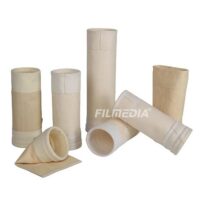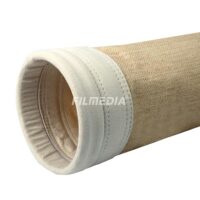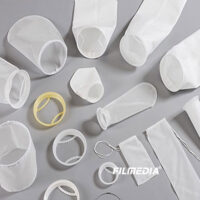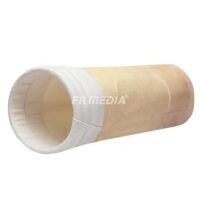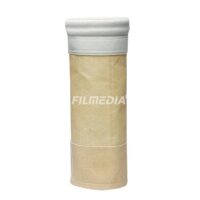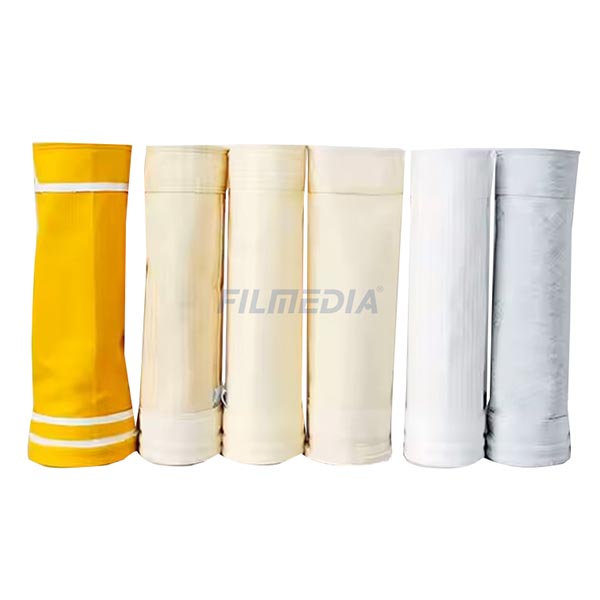
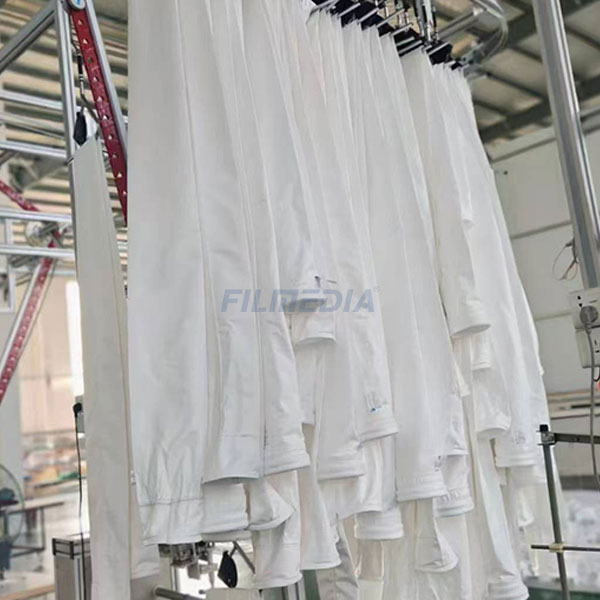
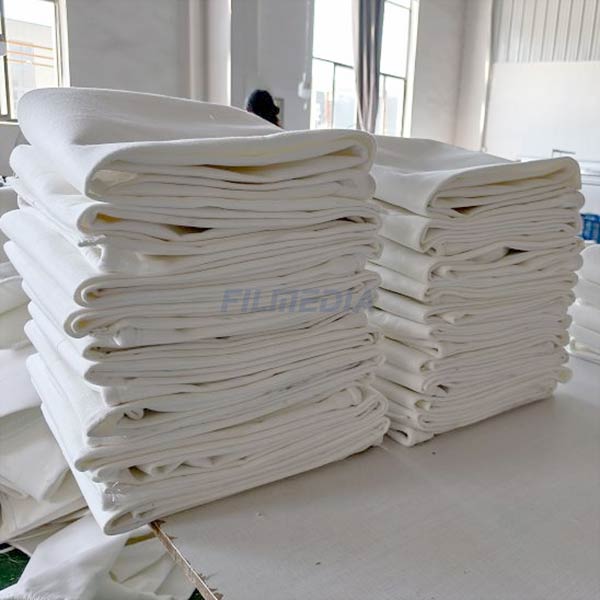
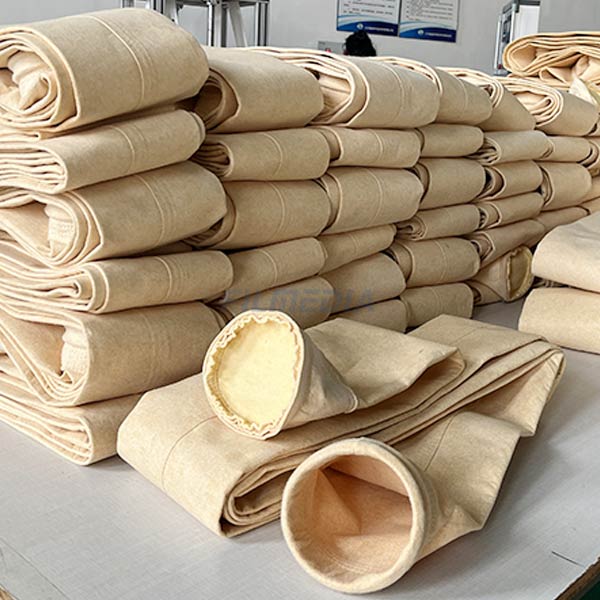
Filmedia® manufactures high-efficiency dust filter bags engineered for industrial dust collection and emission control. We deliver end-to-end filtration solutions tailored to diverse industrial applications, ensuring stable performance, long service life, and compliance with environmental standards.
Additional Processing
- Heat Setting.
- Singeing.
- PTFE Membrane Lamination.
- Water & Oil Repellent Treatment.
- Anti-static Treatment.
- Sewing & Structure Processing.
Specification
- Material: Polyester (PET), PPS, P84, Acrylic, Fiberglass, Aramid, Polypropylene (PP).
- Thickness: 1.2 – 2.5 mm.
- Weight: 450 – 650 g/m².
- Width: 1.5 – 2.2 m (customizable).
Description
What is the calendering process?
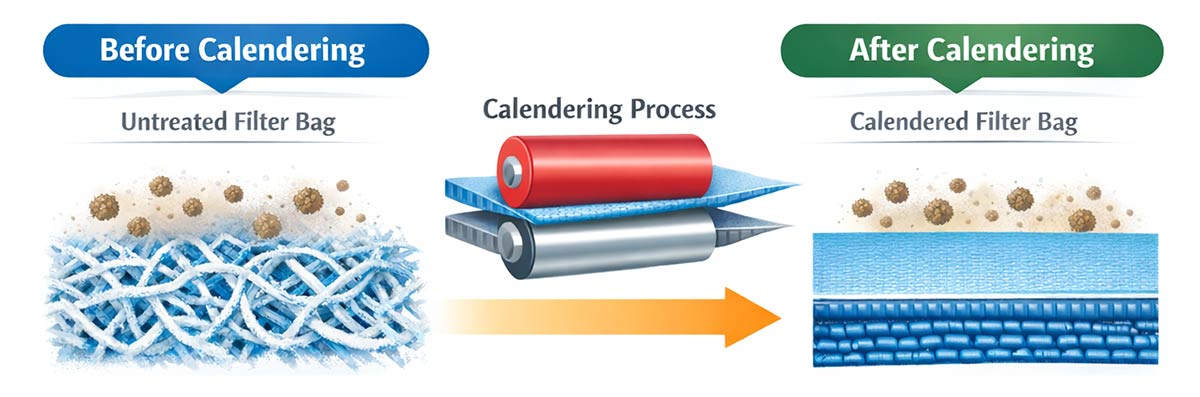
The calendering process, also known as glazing, is a key finishing technique for filter fabrics used in dust filter bags. It involves passing the filter material through a set of precision-polished metal rollers under controlled conditions of temperature and pressure. Typically performed after singeing (to remove loose surface fibers) and before heat-setting, this process compacts the surface fibers of the fabric, resulting in a smooth, dense, and uniform surface. The temperature and pressure parameters are adjusted according to the type of filter material to ensure optimal surface finishing without damaging the fabric’s inherent filtration performance.
What are the benefits of calendering for dust collecting filter bags?
Calendering brings multiple performance advantages to dust filter bags, directly improving their filtration efficiency, service life, and operational stability:
-
Enhanced dust release and easier cleaning: The smooth surface formed by calendering prevents dust particles from embedding deeply into the fabric fibers. Dust cakes form on the surface and can be easily peeled off during pulse-jet cleaning, reducing the frequency of cleaning operations and lowering the system’s operating pressure drop.
-
Improved filtration efficiency: By compacting surface fibers and reducing the effective pore size of the fabric, calendering enhances the capture rate of fine particulates, ensuring more thorough dust filtration and meeting stricter emission standards.
-
Extended service life: The dense surface layer minimizes fiber abrasion caused by dust friction and reduces internal blockage of the fabric, effectively prolonging the service life of the filter bag and reducing replacement costs.
-
Better dimensional stability: Calendering helps to reduce fabric shrinkage and maintain the original shape of the filter bag under high-temperature or high-humidity operating conditions, avoiding bag deformation that could affect filtration performance.
-
Uniform surface performance: The calendering process ensures consistent surface smoothness and density across the entire filter bag, eliminating uneven filtration areas and ensuring stable and reliable filtration performance.
What filter materials are suitable for calendering?
Calendering is compatible with most needle-punched felts and woven filter fabrics, especially synthetic fibers that can withstand the heat and pressure of the process. Common suitable materials include:
-
Polyester (PET): The most widely used material for calendering, with good heat resistance and mechanical strength, suitable for general industrial dust filtration.
-
Polypropylene (PP): Lightweight, corrosion-resistant, and suitable for calendering, ideal for filtration in acidic or alkaline environments.
-
Aramid (Nomex): High-temperature resistant, can be calendered under appropriate temperature control, suitable for high-temperature dust filtration scenarios (e.g., boiler flue gas).
-
PPS (Ryton): Excellent high-temperature and corrosion resistance, compatible with calendering, widely used in harsh industrial filtration environments.
-
P84 (Polyimide): High filtration efficiency and temperature resistance, suitable for calendering to further improve surface performance for fine dust filtration.
-
Acrylic: Moderate heat resistance, suitable for calendering, commonly used in medium-temperature dust filtration applications.
-
Fiberglass: Can be calendered with strict temperature control (to avoid fiber damage), suitable for high-temperature filtration scenarios where other materials cannot be used.
Note: The calendering parameters (temperature, pressure, roller speed) need to be adjusted according to the specific material to ensure the best finishing effect without compromising the material’s inherent properties.
Comparison of filter media performance
| Material | Working Temperature |
Instant Temperature | Abrasion Resistance | Hydrolysis Resistance | Acid Resistance | Alkali Resistance | Oxidation Resistance |
| Polyprolene Needle Felt | 90℃ | 110℃ | Good | Excellent | Excellent | Excellent | Middle |
| Acrylic Needle Felt | 120℃ | 130℃ | Middle | Good | Good | Middle | Good |
| Polyester Needle Felt | 130℃ | 150℃ | Excellent | Poor | Middle | Fair | Good |
| PPS Needle Felt | 180℃ | 200℃ | Good | Excellent | Excellent | Excellent | Fair |
| Aramid Needle Felt | 204℃ | 220℃ | Good | Middle | Middle | Good | Middle |
| P84 Needle Felt | 240℃ | 260℃ | Good | Middle | Middle | Middle | Good |
| Fiberglass Needle Felt | 250℃ | 280℃ | Fair | Good | Middle | Fair | Good |
Difference Between Calendering and PTFE Membrane Lamination
| Comparison Item | Calendering | PTFE Membrane |
|---|---|---|
| Cost | Low | High |
| Filtration Mechanism | Surface densification | Microporous membrane filtration |
| Filtration Precision | Moderate improvement | High precision |
| Suitable Applications | Standard operating conditions | Ultra-low emission requirements |