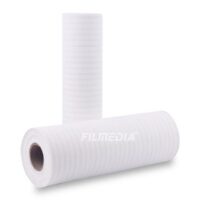
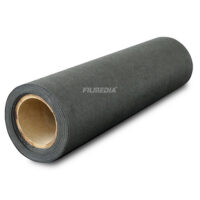
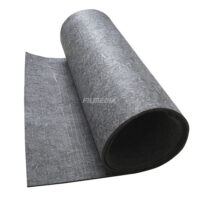
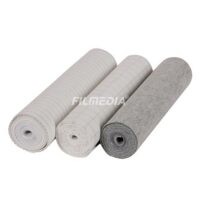
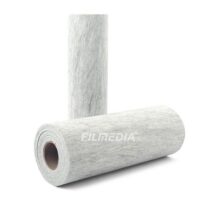
PTFE & P84 needle felts offer superior performance in extreme filtration conditions, combining the best properties of both materials. They are widely used in industries where high temperature, chemical exposure, and fine particulate filtration are critical.
Description
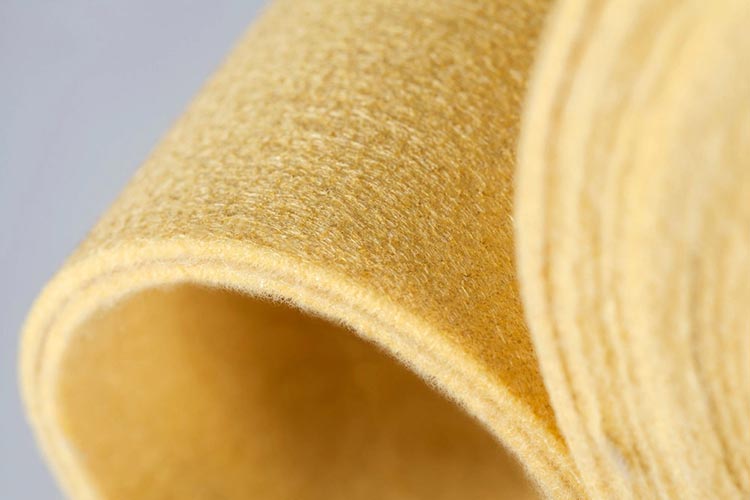
Why Choose PTFE & P84 Needle Felt?
- Excellent acid and alkali resistance
- Significant cost-effectiveness, with a 30% drop in overall costs
- PTFE chemical inertness: Excellent acid and alkali resistance (especially suitable for high sulfur and high alkali dust environment in cement plants)
- Compared with pure P84: PTFE + P84 has a 50% longer life in highly corrosive gases, avoiding frequent replacement.
- Material optimization: 80% PTFE + 20% P84 mixing process, reducing the amount of high-priced P84 while maintaining performance.
- Extended life: Good wear resistance, and reduced downtime maintenance frequency.
- Continuous operation at 240°C, instantaneous temperature resistance of 260°C (adapted to the high temperature impact of cement kiln exhaust gas).
Specification
| Physical properties | ||
| Fiber | PTFE fiber(80%), P84 fiber(20%) | |
| Scrim | PTFE yarn | |
| Weight | g/m² | 650 |
| Thickness | mm | 1.4 |
| Width | m | ≤2.2 |
| Finish treatment | PTFE impregnation | |
| Air permeability | l / dm2 / min @200pa | 100±20 |
| Tensile strength | Warp (N/5×20cm) | ≥800 |
| Weft(N/5×20cm) | ≥1000 | |
| Tensile elongation | Warp (%) | ≤10 |
| Weft (%) | ≤10 | |
| Temperature | ||
| Continuous temperature | C° | 240 |
| Instant temperature | C° | 260 |
| Chemical Properties | ||
| Anti-acid | Excellent | |
| Anti-alkali | Excellent | |
| Anti-abrasion | Good | |
| Hydrolysis stability | Excellent | |
Note: The above mentioned data have been determined according to the averages obtained from a series of typical results by our lab and are intended just for reference. The technical information is subject to changes, usual tolerances apply.
Applicable Equipments
- Cement kiln tail gas dust collectors
- Raw mill dust removal systems
- Coal mill dust collectors.