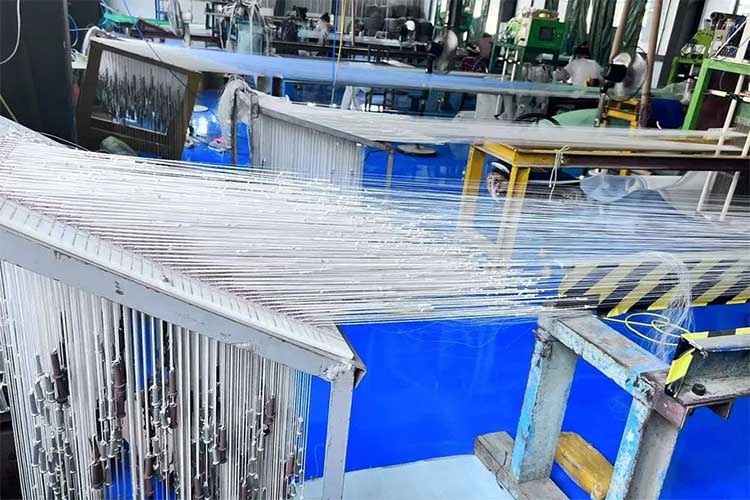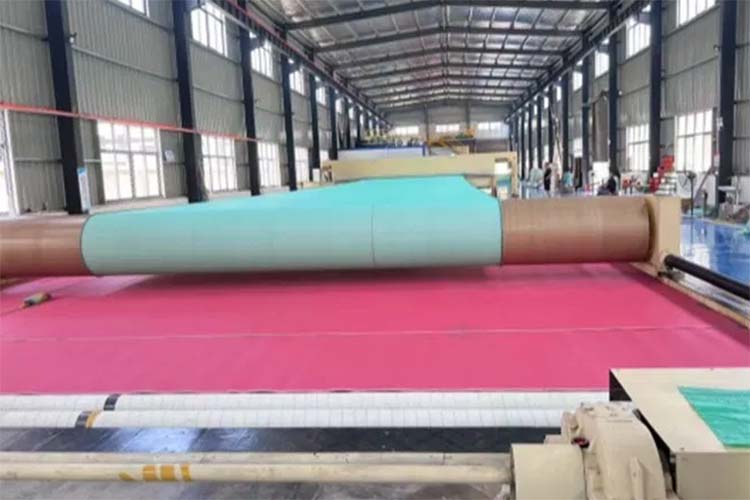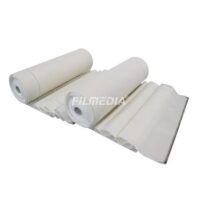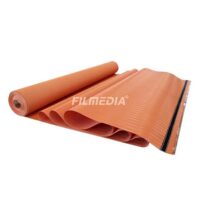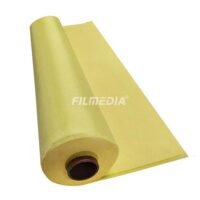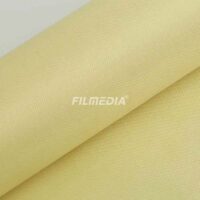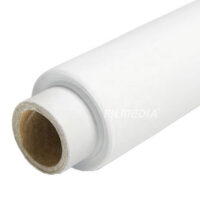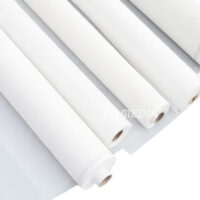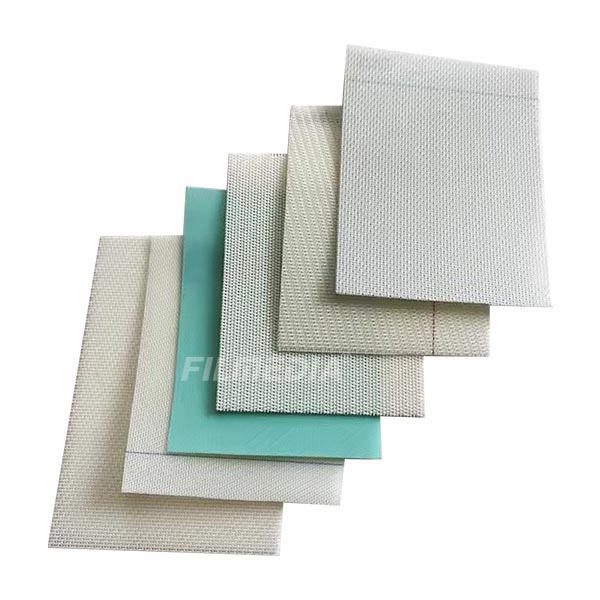
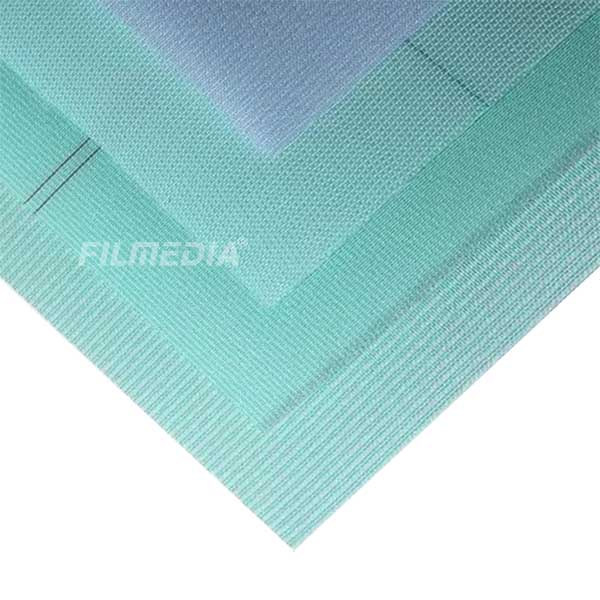
Monofilament filter fabric is a filtration material made by weaving single fibers (monofilament), widely used in industrial filtration and separation, especially in high-demand filtration environments. Due to its unique structure and excellent performance, monofilament filter fabric is an indispensable part of many industrial processes, particularly in applications requiring high pressure and strength.
Description
Features of Monofilament Filter Fabric
-
High Strength: Made from single fibers, monofilament filter fabric has high tensile strength and abrasion resistance, capable of withstanding high pressure and strength, making it suitable for harsh filtration environments.
-
Excellent Air and Water Permeability: The gaps between the fibers are large, allowing for excellent air and water permeability, which improves filtration efficiency.
-
Easy to Clean and Regenerate: Its smooth surface makes it less prone to clogging, and it is easy to clean, which helps extend its lifespan.
-
Chemical Resistance: Made from chemically resistant materials such as polyester, polypropylene, and polyamide, monofilament filter fabric can be used in various chemical media for long periods.
Common Monofilament Filter Fabric Materials
| Feature | Polyester (PET) | Nylon (PA) | Polypropylene (PP) |
|---|---|---|---|
| Strength | High, suitable for medium to high-strength filtration | High, suitable for high-impact and high-wear environments | Medium, suitable for low to medium-strength filtration |
| Heat Resistance | Good, suitable for environments up to 150°C | Good, suitable for environments up to 120°C | Fair, suitable for environments up to 130°C |
| Acid & Alkali Resistance | Good resistance to most acids and alkalis | Poor acid resistance, better alkali resistance | Excellent, suitable for strong acid and alkali environments |
| Moisture Absorption | Low, suitable for humid environments | High, may affect filtration performance in humid environments | Low, suitable for moist environments |
| Abrasion Resistance | Good, suitable for general industrial environments | Excellent, suitable for high-wear environments | Fair, suitable for low-wear environments |
| Chemical Resistance | Good, suitable for most chemical media | Poor, sensitive to acids | Excellent, especially for chemical media filtration |
| Cost | Medium | Higher | Low, cost-effective |
Available Weaves
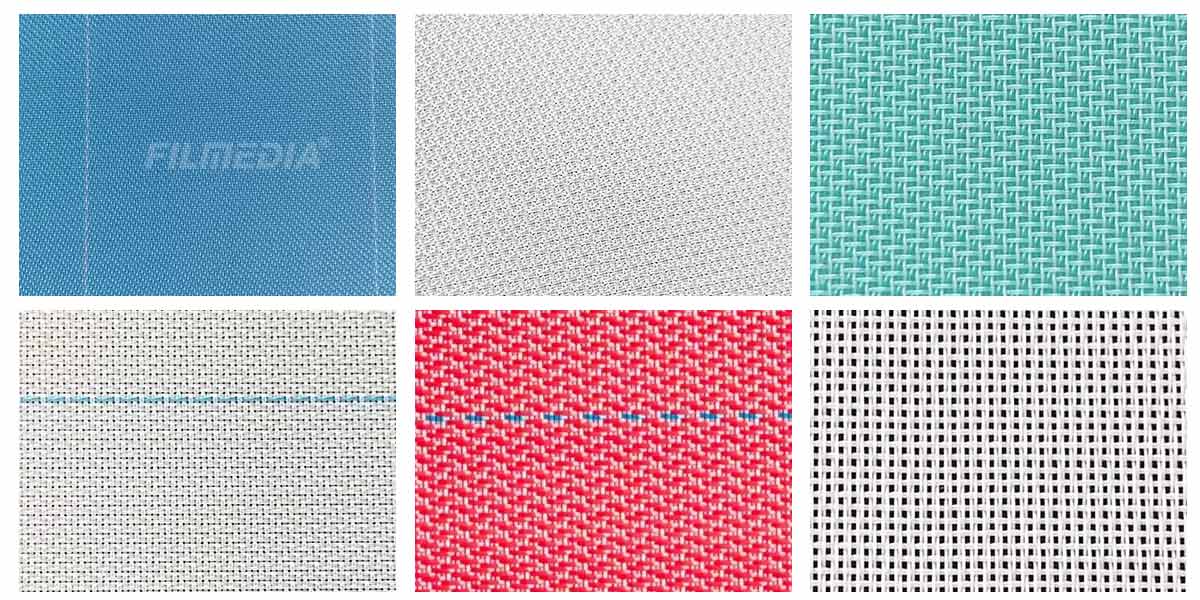
- Plain Weave
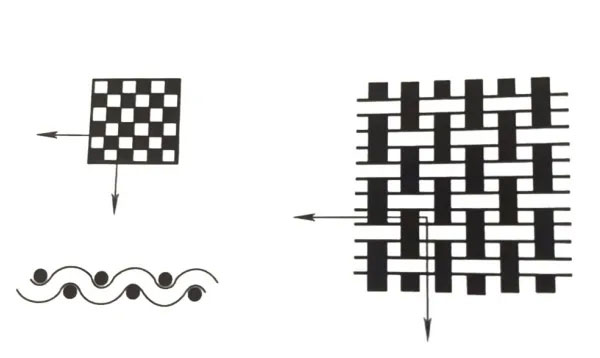
Plain weave is the most common weaving method, characterized by the alternating interlacing of warp and weft fibers, forming a dense structure. Monofilament filter fabric with plain weave has good strength and stability, making it suitable for general filtration needs. Its simple structure offers good air and water permeability, making it ideal for most solid-liquid separation and filtration applications.
- Twill Weave
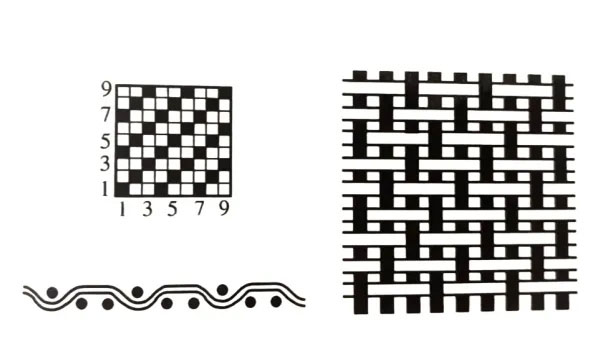
Twill weave forms a diagonal pattern by alternating the warp and weft fibers. Monofilament filter fabric with twill weave offers higher strength and abrasion resistance. It typically has good air permeability, making it suitable for filtration environments that require high strength, such as high-pressure filtration and continuous production processes.
- Satin Weave
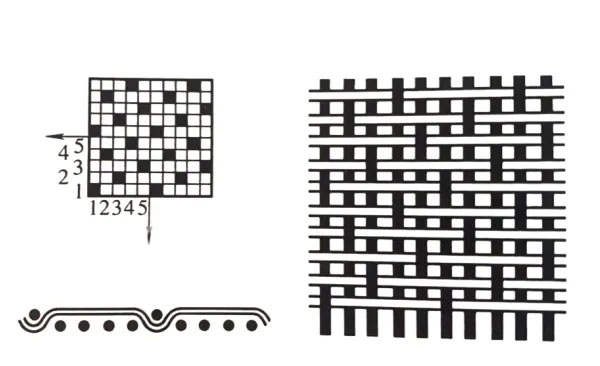
Monofilament filter fabric with satin weave has a smooth surface with good gloss and air permeability. Due to the looser weaving structure, it allows for excellent fluid flow, making it ideal for fine filtration applications and those requiring high surface quality, such as filtering high-purity liquids.
Common Application Areas
Commonly used in industries like alumina, phosphate fertilizer, cement, metallurgy, chemical fiber, dyes, coal mining, and others.
- Mining: Used for solid-liquid separation in ore dehydration and tailings treatment.
- Chemicals: Used in the filtration and separation of chemical products, such as purifying chemical raw materials.
- Food: Used in food processing for filtration, such as purifying syrups and juices.
- Environmental Protection: Used in wastewater treatment, flue gas dust removal, and other environmental engineering applications.
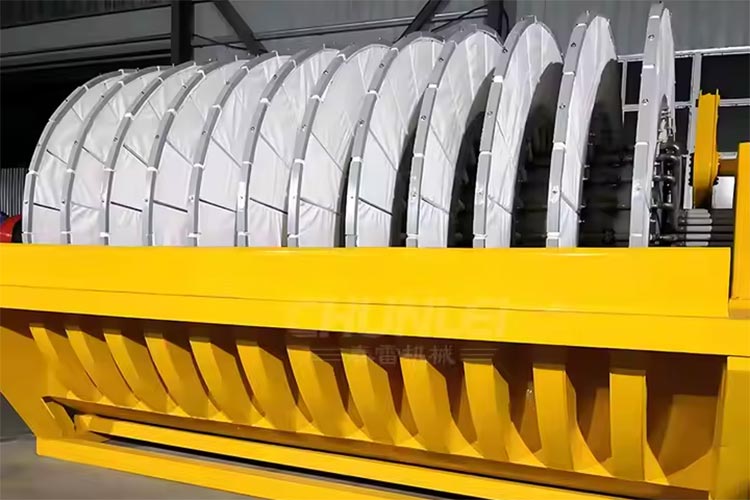
It is particularly suitable for various equipment such as belt filters, vacuum drum filters, leaf filters, candle filters, closed filters, and more.


Choose Filmedia®
Filmedia® provides comprehensive customization services to ensure that every filter cloth precisely matches your equipment requirements in terms of size, structure, and performance.
We select the most suitable fiber materials and weaving patterns based on your specific working conditions—such as temperature, chemical environment, filtration precision, and operating speed—and can customize thickness, weight, air permeability, surface treatment, and connection methods as needed.
Whether for standard equipment or non-standard filtration systems, Filmedia® delivers stable, efficient, and durable filter cloth solutions that help improve filtration efficiency and extend equipment service life.