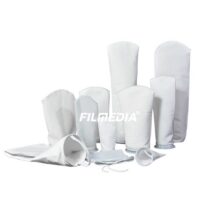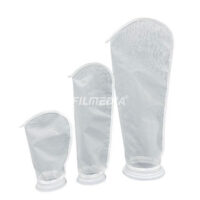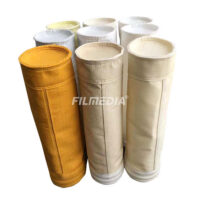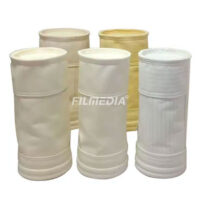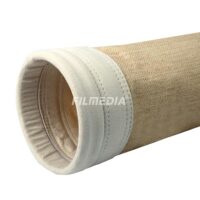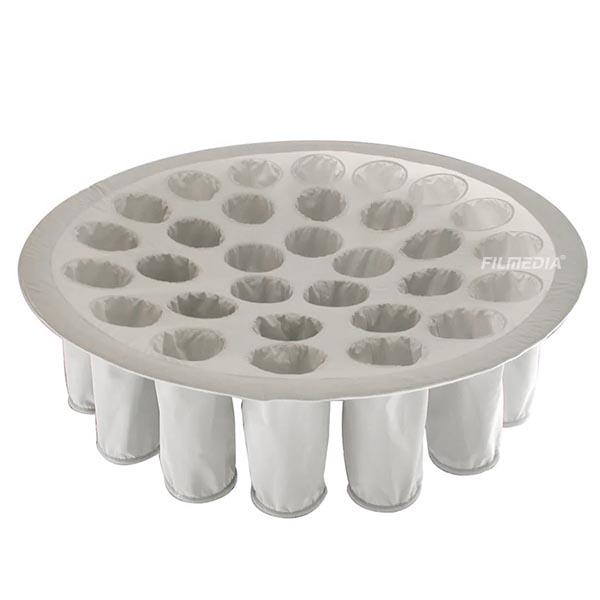

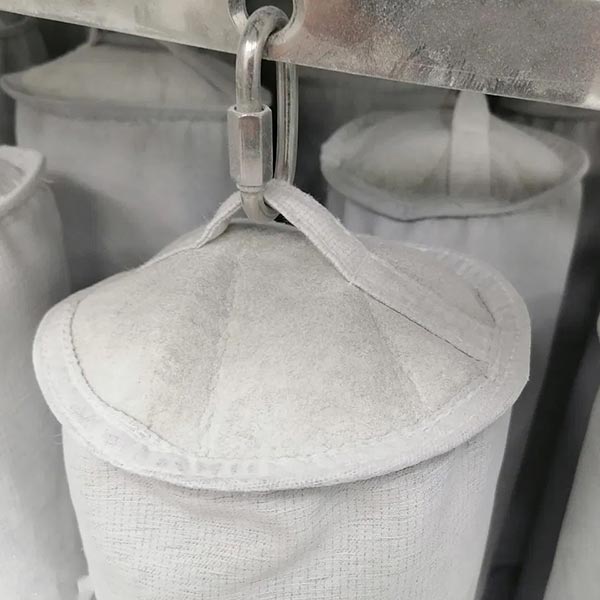
Filmedia® supplies high performance filter bags for fluid bed dryers, which are widely used in pharmaceutical, chemical, mining, food and other industries.
- High filtration accuracy.
- Good antistatic performance.
- Material meets pharmaceutical standards.
- Good air permeability and low resistance.
- Strong corrosion resistance.
- Good sealing.
Description
During the operation of the fluidized bed dryer, the filter bag is used to separate and filter the particles generated during the material drying process to prevent the particles from being discharged with the air flow, ensuring the recovery rate and quality of the product, while also helping to reduce environmental pollution. Through the filtering effect, the hot air can better contact the material, promote the evaporation of moisture in the material, improve the drying efficiency and effect, and ensure the smooth progress of the drying process.
Product Features
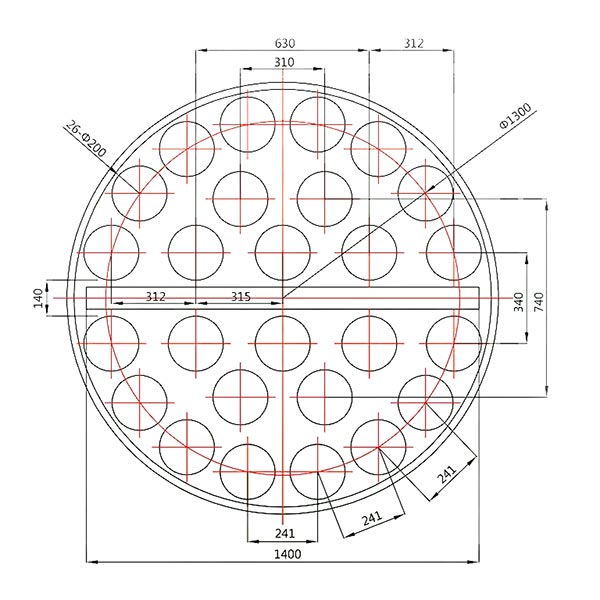
- Cylindrical filter bag: Cylindrical filter bag has a larger filtration area and can handle more gas and particles per unit time.
- Multiple filter sleeves: In order to increase the filtration area and improve the filtration efficiency, the filter bag adopts the form of multiple filter sleeves. These filter sleeves can provide a larger filtration area in a limited space and are also easy to install and disassemble.
- Lockstitching process: Ensure that the sewing parts of the filter bag are firm and reliable, and will not break when subjected to the impact of airflow and particles during the drying process, ensuring the sealing and firmness of the filter bag.
- Anti-static: Prevents static adsorption of particles during the drying process to ensure filtering effect and product quality. It is often used in drug drying processes that are sensitive to static electricity.
Advantages of Polyester Fiber Bags
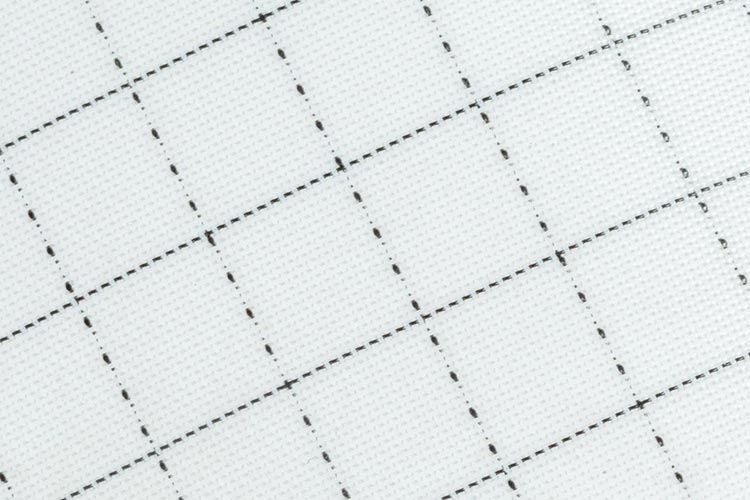
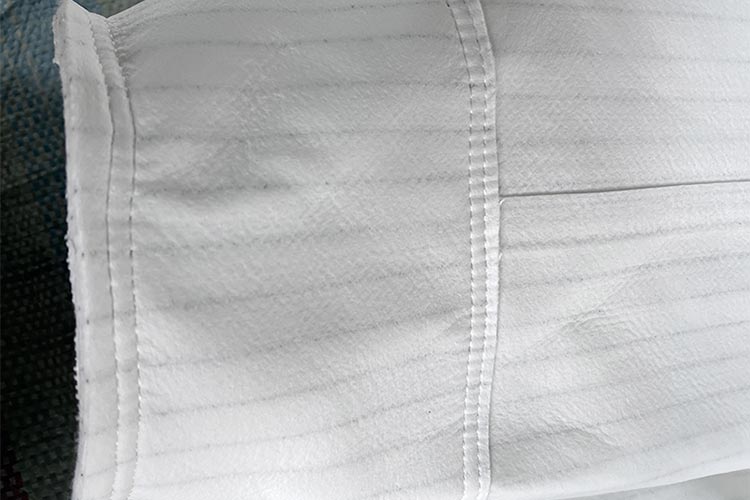
The reason why polyester fiber is widely used as a material for fluidized bed dryer filter bags is mainly due to its comprehensive advantages in performance, applicability and economy, which can meet the core requirements of the fluidized bed drying process.
- Temperature resistance: Polyester fiber can withstand temperatures below 130°C (some modified products have higher temperature resistance), and can adapt to the normal working temperature of the fluidized bed dryer (usually 50-120°C), avoiding material aging or performance degradation due to high temperature.
- Good chemical stability: It is corrosion-resistant to most non-corrosive materials (such as food raw materials, ordinary chemical particles, pharmaceutical intermediates, etc.), and is not easily chemically degraded due to contact with materials or detergents, maintaining structural integrity.
- Modifiable potential: Anti-static polyester fiber can be made by adding conductive components, which can effectively dissipate static electricity generated by friction of materials in the fluidized bed and reduce the risk of dust explosion. It is especially suitable for flammable and explosive environments (such as pharmaceutical and chemical industries).
Materials & Performance
| MODEL | Material | Weaving | weight(g / m 2)+ 5% | Density (pcs/10cm) | Thickness (mm) + 2% | Breaking strengthF(N / 5x20cm) | Elongation at break(%) | Breathability(L / m 2 S) + 25% | |||
| longitude + 5% |
latitude+ 5% | longitude + 2% | latitude + 2% | longitude | latitude | ||||||
| ES1710 | Polyester antistatic | Twill | 167 | 984 | 472 | 0.21 | 1309.4 | 745.4 | 15.13 | 17.33 | 67.5 |
| ES1730 | Polyester antistatic | Twill | 382 | 670 | 275 | 0.51 | 3738 | 1769.4 | 21.8 | 39.5 | 39.5 |