

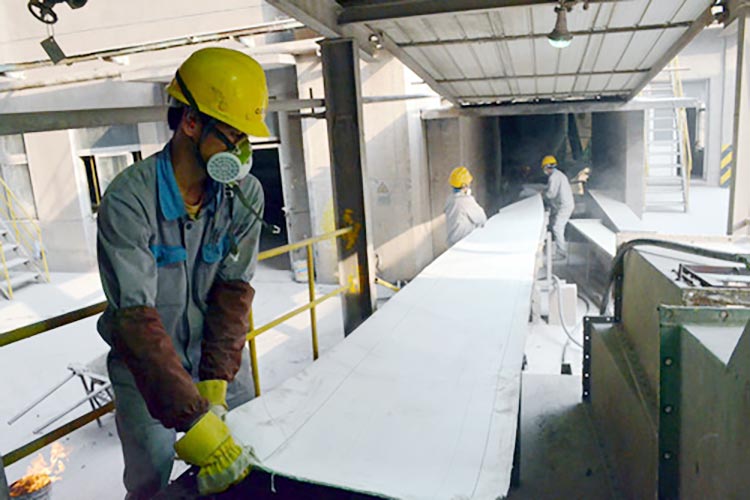
In the cement industry, air slide fabric plays a crucial role in the pneumatic conveying system of powdered materials, particularly cement. Cement is typically a fine, powdery substance, which makes it ideal for transportation using air slide fabrics. These fabrics are designed for abrasion resistance, air permeability, and strength, making them ideal for pneumatic conveying systems. They offer benefits such as low maintenance, energy efficiency, and gentle material handling. Air slide fabrics are also versatile, used for conveying cement, additives, and alternative fuels, and are essential for operations such as cement packaging, silo systems, and transportation.
Function of Air Slide Fabric in Cement Transport
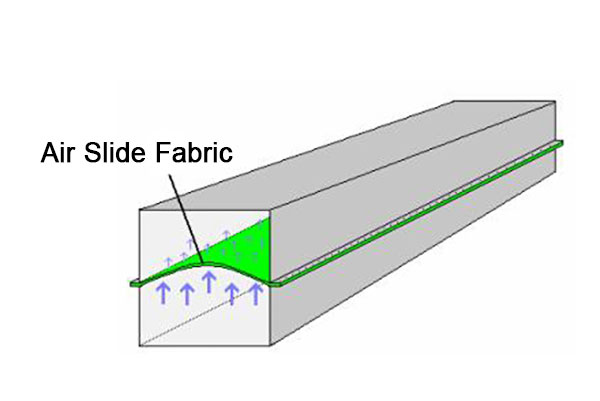
Air slide fabrics are used in pneumatic conveying systems where compressed air is blown through the fabric to move fine powders like cement. The air passing through the porous fabric creates a fluidized bed effect, allowing the cement to be transported along the fabric without mechanical assistance. Air slide fabrics help facilitate the smooth flow of cement powder from one location to another, typically from storage silos to packaging units or between various processing stages. The airflow under the fabric keeps the cement suspended, reducing friction and ensuring continuous, efficient material transport over long distances. The porous nature of air slide fabric ensures that air can circulate freely, preventing the cement from sticking or clogging, which can happen with traditional mechanical conveyors.
Types of Air Slide Fabrics for Cement
| Fabric Type | Material Properties | Advantages | Applications |
|---|---|---|---|
| Polyester Woven Fabrics | Strong, durable, abrasion-resistant, cost-effective | Excellent wear resistance, good air permeability, cost-effective | Standard cement conveying, storage, packing |
| Nylon Woven Fabrics | High tensile strength, impact resistant, good elongation properties | Superior strength and abrasion resistance, shock resistant | Heavy-duty cement systems, high-throughput silos |
| Polypropylene Woven Fabrics | Chemical and thermal resistance, lightweight | Chemical resistance, temperature resilience, lightweight | Cement with chemical additives, high-temperature systems |
| Aramid (Kevlar) Woven Fabrics | High strength, heat-resistant, extremely durable | Extreme abrasion resistance, heat tolerance, long lifespan | Extreme environments, long-distance conveying, high-performance applications |
Choosing the Right Air Slide Fabric
- For Standard Cement Conveying: Polyester-based fabrics are typically sufficient due to their cost-effectiveness, good abrasion resistance, and air permeability.
- For Heavy-duty Applications: Nylon-based fabrics are better for systems with higher loads or impact forces.
- For Specialized Applications: Polypropylene fabrics are ideal if chemical resistance or heat tolerance is required. Aramid fabrics are best suited for extreme environments that involve high temperatures and abrasive materials.
Learn more about air slip fabric products. Go!