
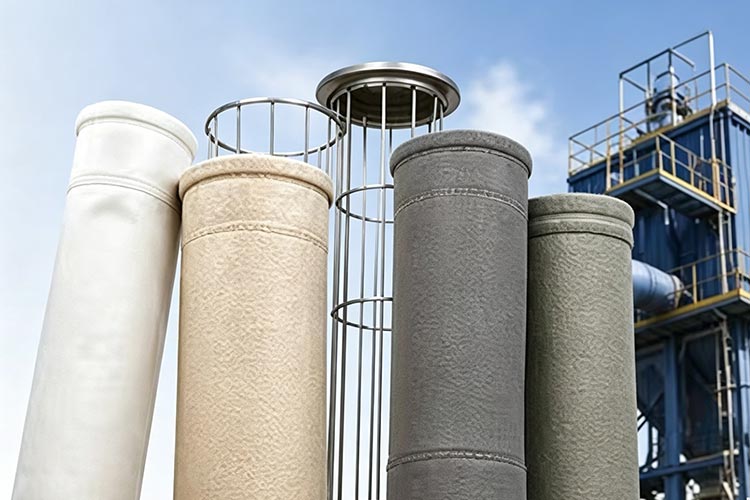
Even with the same fabric specification, we often see lifetime differences of 30%-200% in real operating conditions.
01. Fabric Is Only The Starting Point

The base material defines the potential of the filter bag, but it does NOT define how it performs in real dust collection systems.
- Material determines “what it can survive”.
- Design & Conditions determine “how long it actually survives”.
02. Filtration Design Matters More Than People Think

Small structural differences can completely change lifetime.
- Air-to-cloth ratio too high → accelerated wear.
- Poor cage design → mechanical abrasion.
- Incorrect bag tension → seam stress and fatigue.
- Inconsistent airflow distribution → local overloading.
03. Operating Conditions Are Often Underestimated
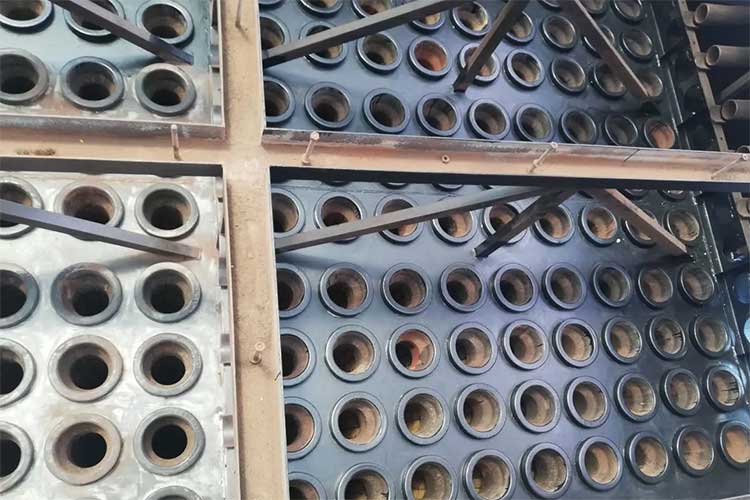
Two identical filter bags can perform completely differently in:
- Dust type (abrasive vs. soft particles).
- Moisture content.
- Gas temperature fluctuations.
- Chemical composition (acid/alkali exposure).
For example, slight condensation can dramatically shorten bag life due to:
- dust cake hardening.
- corrosion acceleration.
- increased cleaning stress.
04. Cleaning System Is a Silent Killer
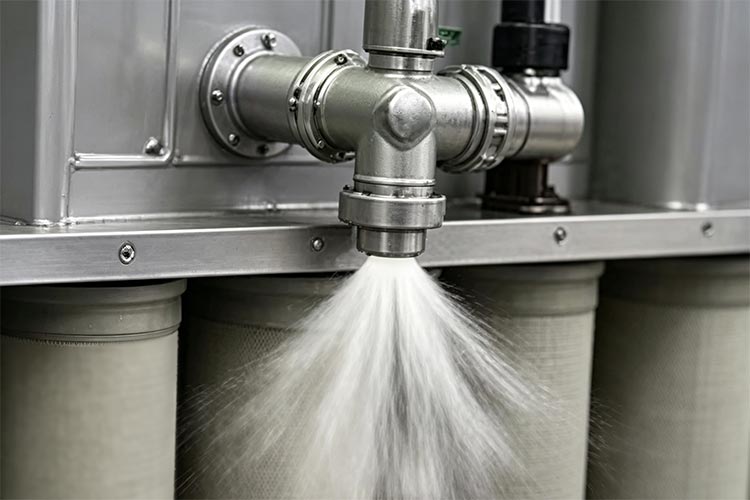
- Pulse-jet settings are often overlooked, but they are critical.
- Too strong pulse → fabric fatigue & fiber damage
- Too weak pulse → dust build-up & pressure rise
- Incorrect frequency → uneven stress cycles
Over time, this “invisible stress” becomes one of the biggest reasons for premature failure.