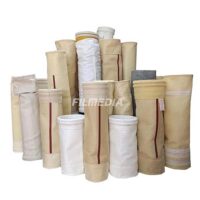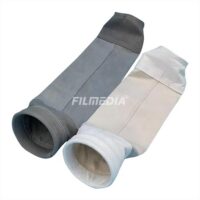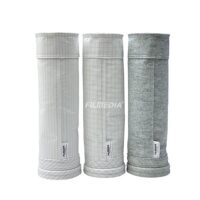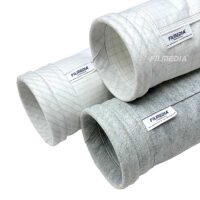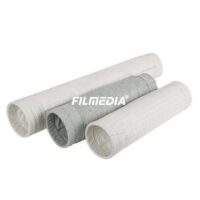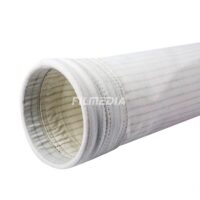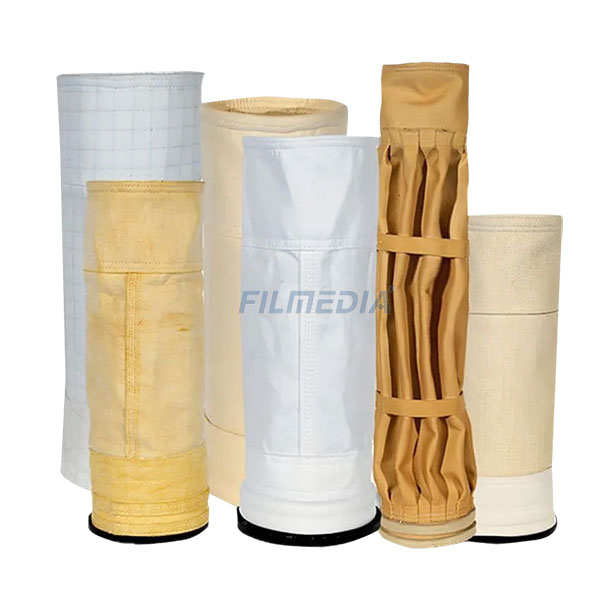
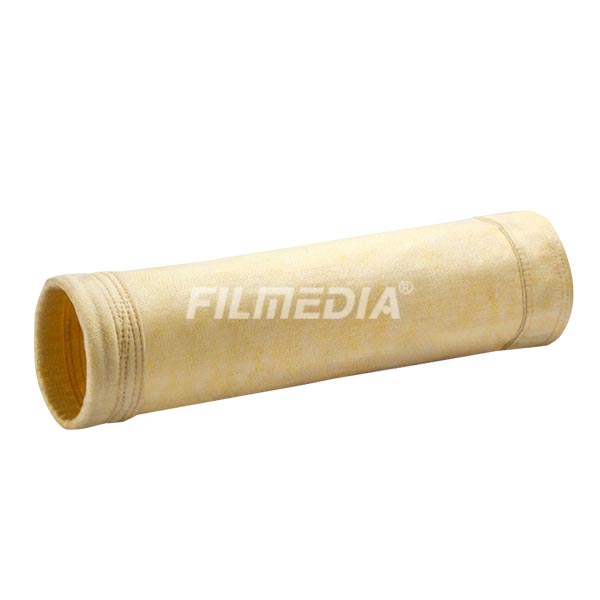
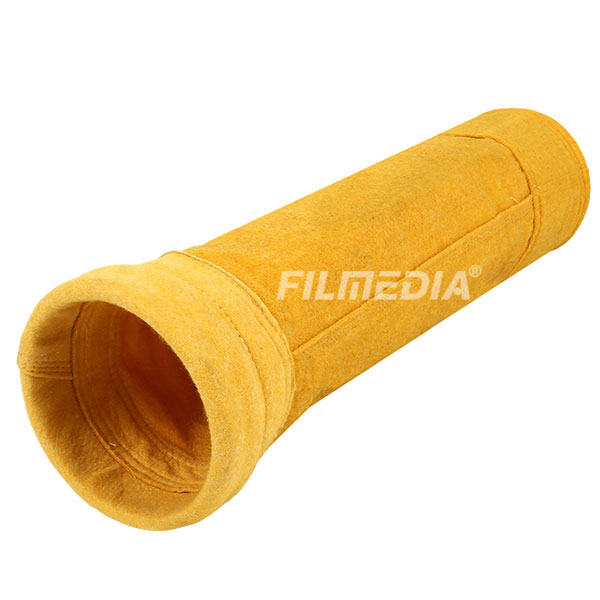

With advanced filtration materials and strict quality control, Filmedia® filter bags are capable of operating reliably in demanding environments such as high temperature, high humidity, corrosive gases, and chemically aggressive dust. They are widely used in industries including cement production, power generation, waste incineration, metallurgy, chemical processing, and asphalt mixing plants.
We supply corrosion-resistant needle-punched felt dust collection filter bags made of the following materials:
- Polyester (PET).
- PPS (Polyphenylene Sulfide).
- P84 (Polyimide).
- PTFE (Polytetrafluoroethylene).
- Fiberglass (with PTFE coating).
Description

In industrial dust collection systems, some dust particles are not only abrasive but also corrosive. When dust reacts with moisture in the air or process gases, it often forms acidic or alkaline substances, which can corrode ordinary filter bag materials and shorten their service life. Therefore, in such conditions, filter materials with stronger corrosion resistance are required.
Which dusts are corrosive?
In industrial production processes, the following types of dust are typically highly corrosive:
1. Dust containing acidic components
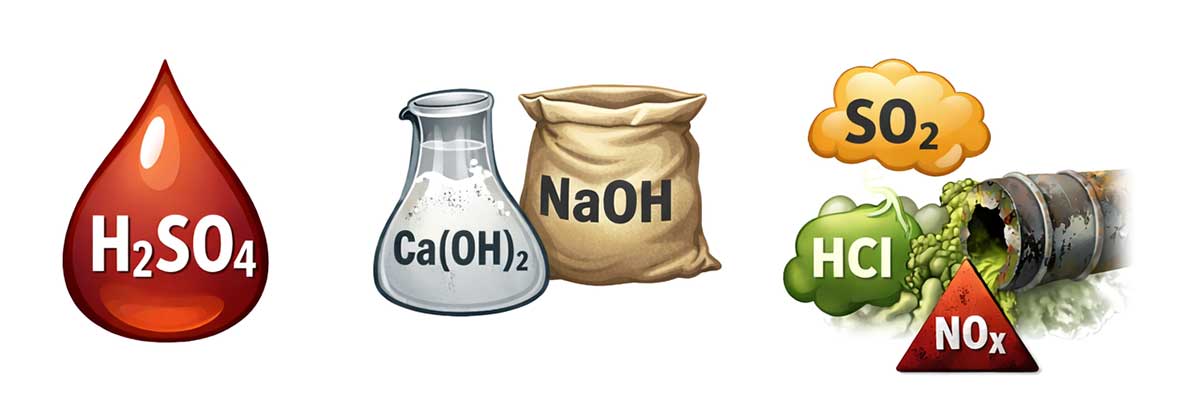
Some dusts release or form acidic substances in high-temperature or humid environments, such as:
- Sulfate dust (e.g., sulfuric acid production, chemical industry)
- Chloride dust (waste incineration, chemical production)
- Phosphate dust
- Fluoride-containing dust (e.g., fluoride production)
Common industries:
- Waste incineration plants.
- Chemical plants.
- Sulfuric acid production.
- Metallurgical flue gas treatment.
These dusts easily form corrosive media such as sulfuric acid, hydrochloric acid, or hydrofluoric acid.
2. Dust containing alkaline components
Some industrial dusts are highly alkaline, such as:
- Cement dust.
- Lime dust.
- Calcium oxide dust.
- Alkaline chemical dust.
Common industries:
- Cement plants.
- Lime kilns.
- Building materials production.
- Mineral processing.
Alkaline dust can chemically degrade certain filter bag materials.
3. Dust Containing Chemically Reactive Gases
In some flue gas dust removal systems, dust may coexist with the following gases:
- SO₂ / SO₃
- HCl
- HF
- NOx
These gases, when combined with moisture, can form highly corrosive acidic substances that damage the filter bag material.
Common Filter Materials Suitable for Corrosive Environments
Choosing the right filter bag material can not only extend the service life of the filter bag, but also reduce maintenance costs and improve the operational stability of the dust removal system.
| Filter Material | Continuous Temperature | Corrosion Resistance | Main Advantages | Typical Applications |
|---|---|---|---|---|
| Polyester (PET) | ≤ 130°C | Moderate resistance to weak acids, poor alkali resistance | Good mechanical strength, widely used | General industrial dust collection |
| PPS (Polyphenylene Sulfide) | ≤ 190°C | Excellent resistance to acids and chemical gases (SO₂, SO₃) | Good hydrolysis resistance, stable in sulfur-containing flue gas | Coal-fired boilers, power plants, waste incineration |
| P84 (Polyimide) | ≤ 240°C | Good resistance to acids and organic solvents | High temperature resistance, high filtration efficiency | Asphalt mixing plants, waste incineration |
| PTFE (Polytetrafluoroethylene) | ≤ 260°C | Outstanding resistance to almost all chemicals | Excellent chemical stability, long service life | Waste incineration, chemical industry, high-corrosion environments |
| Fiberglass (with PTFE coating) | ≤ 260°C | Good resistance to most acids, sensitive to alkalis | Excellent high-temperature performance | Cement plants, steel industry, high-temperature filtration |