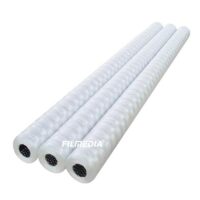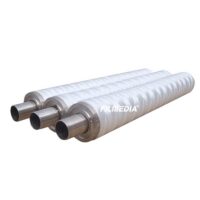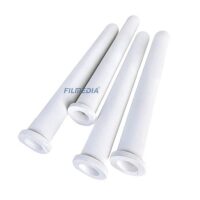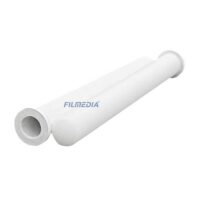
Self-cleaning air filter cartridges are advanced filtration systems designed to reduce the need for manual cleaning or replacement. These cartridges incorporate a mechanism or technology that enables them to clean themselves during operation, maintaining optimal performance and extending their lifespan.
Description
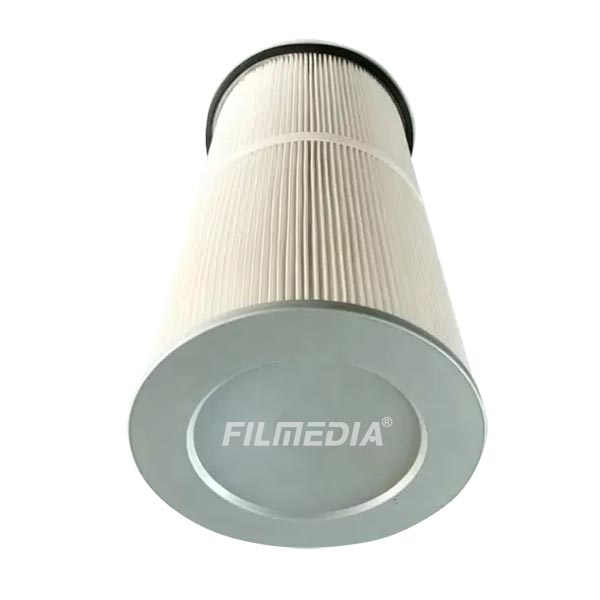
When air power equipment inhales dusty air, it will cause wear and tear on the equipment. The inhaled dust will scale on the surface of the fan blades, causing the dynamic balance accuracy of the rotor in the equipment to decrease, greatly shortening its service life. The harmful chemical components in the dust will cause the equipment to rust and corrode. Therefore, air power equipment must be equipped with high-precision air filter cartridges. Self – cleaning air filter cartridges are compact. The filter paper adopts a pleated design, which has a larger filtering area and can capture submicron particles. The outer metal mesh protects the filter paper and evenly distributes the air. The top pulse backflush interface is connected to the control system for self-cleaning.

Product Features
- It can realize automatic cleaning of air filter elements, so that the equipment can operate normally without affecting the normal operation of other filter elements.
- It can work normally under the condition of relative humidity of 99%.
- It has large filter area, low flow rate and small resistance loss.
- The filter element has a long service life. Under normal environmental conditions, the filter element replacement cycle can reach about 2 years.
- According to user requirements, dust collection box and dustproof net can be added to the bottom of filter cartridge.
- Non-standard design can be carried out according to customer requirements.
Details
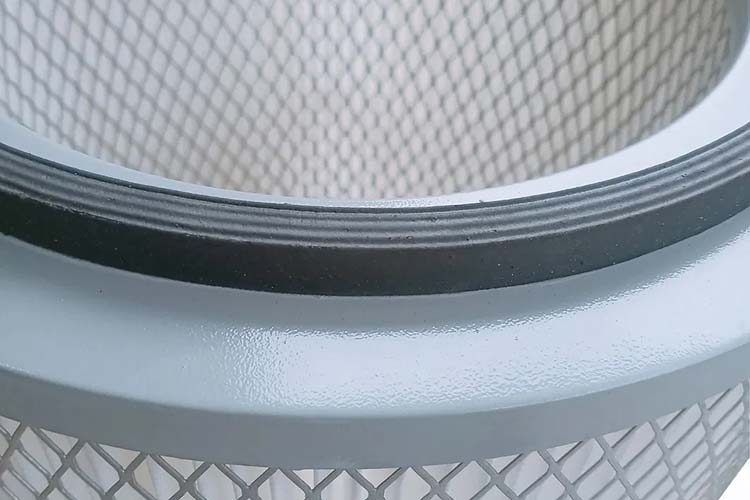
- Specialized Airtight Neoprene
We use special sealing rubber ring, good sealing, strong resistance to sinking ability; keep stable, anti-aging and anti-erosion during temperature change, to ensure effective sealing at the outlet end. - Metal End Caps
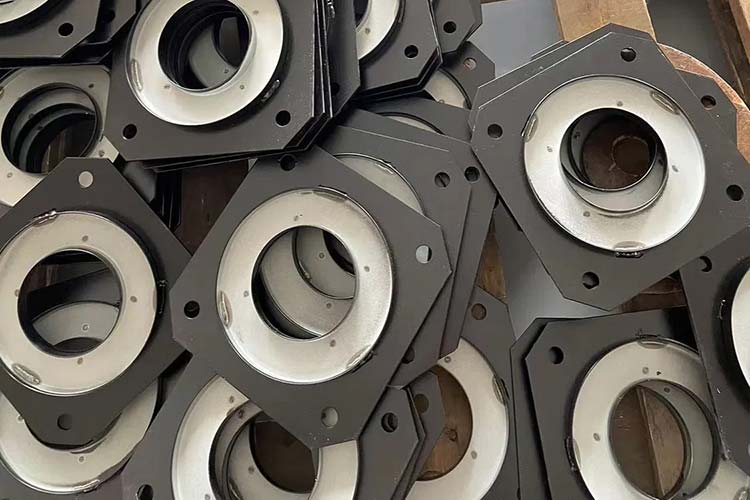
Selected more than 8mm thick rustproof steel plate stamping (not easy to deform), supporting the strength of the filter can prevent the cartridge blowing broken blowing suction deflated.
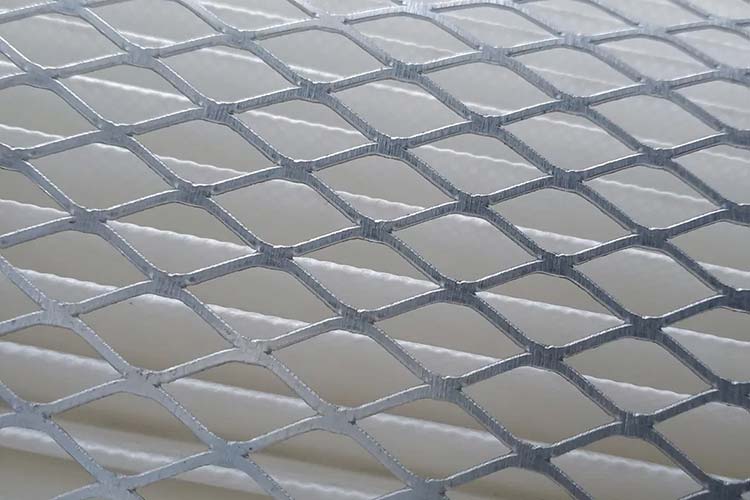
- Reinforced with Mesh
The inside and outside of the canister are reinforced with hard diamond mesh, galvanized rust-proof metal structural parts with good flame retardant properties, avoiding sparks generated during the cutting process to burn the filter cartridge. - Polyester Fiber Filter Paper
Small stacking gap, sufficient number of wide pleats, very good moisture resistance, large filtering area, better filtration effect, longer service life.
Specifications
| Parameter | Details | Options / Range |
|---|---|---|
| Standard Diameter (mm) | Outer diameter of the filter | 100, 120, 150, 180, 200, 325, 350 |
| Standard Length (mm) | Usable length of the cartridge | 300, 500, 600, 660, 1000, 1200, 2000 |
| Filter Media | Material composition | Polyester, PTFE-coated, Nano-fiber, Cellulose, Nomex®, Stainless Steel Mesh |
| Filtration Efficiency | Particle capture rate | 99.9% @ 1-5 microns (varies by media) |
| Max Operating Temp. | Continuous use temperature limit | -20°C to 120°C (PTFE up to 260°C) |
| Airflow Rate | Recommended CFM per cartridge | 10-50 CFM (depends on size & design) |
| Pleat Count | Number of pleats per cartridge | 45-150 (optimized for low resistance) |
| Weight | Approx. weight per unit | 1-5 kg (varies by size/material) |
| End Caps Material | Sealing/structural components | Polyurethane, Metal (galvanized/aluminum) |
| Gasket Material | Seal type for housing compatibility | EPDM, Silicone, Nitrile (temperature-resistant) |
| Application Compatibility | Dust collector types | Pulse-jet, Reverse-air, Cartridge Housings |
Applications
- Various types of air compressor stations.
- Raw material air compressors for oxygen production stations.
- Blast furnace blowers for steel plants.
- Gas turbines of various capacities.
- Diesel engines that need to run for a long time.
- Air conditioning and air supply systems for chemical fiber textile industries.
- Centralized air conditioning systems with high requirements for air dust content.
- Pollution and prevention of solutions in the chemical industry.