
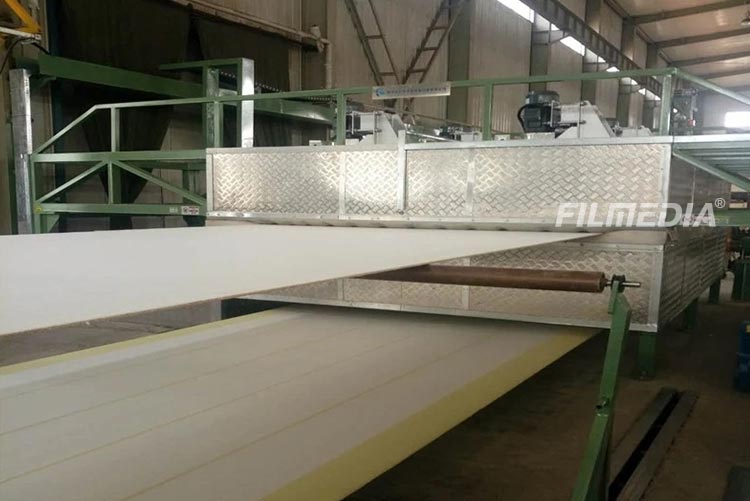
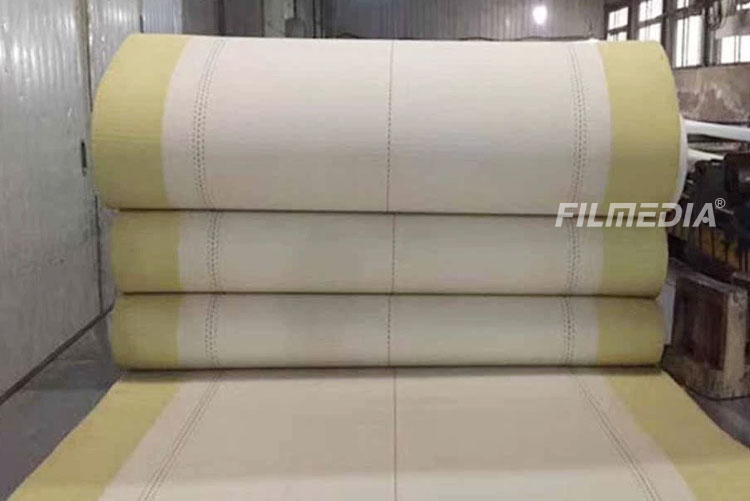
After the new belts arrive, special attention should be paid during unloading and transportation. Due to the relatively large weight and volume of cotton conveyor belts, improper handling may easily result in surface damage. In particular, avoid contact with sharp tools or edges, as the belt surface can be cut or scratched.

Installation Instructions
- Before replacing the conveyor belt, carefully identify the installation direction.
The belt joint must be installed with the canvas surface facing the correct side. During installation, the joint direction should be opposite to the running direction of the belt opening. The specific installation position depends on the layout of the production line; however, it is generally recommended to position the joint near the preheating section, close to the cylinder rollers. - Once the installation direction has been confirmed, allow the old belt joint to run to the designated working position. Remove the worn belt section, and connect one end of the new belt to the old belt.
Start the main drive roller and use the old belt to pull the new belt through the entire production line. When the new belt reaches the correct working position, completely remove the old belt and connect the two ends of the new belt using the appropriate pins.
During initial testing, operate the belt at a slow speed and monitor the installation carefully to avoid misalignment, side collision, or other potential accidents. - As the belt thickness may vary slightly, initial adjustment is required when the conveyor is put into operation. Use the hot plate pressure system and gravity rollers to adjust the friction between the belt and the paperboard, ensuring stable conveying and consistent bonding quality of the cardboard.
- After starting the conveyor, do not immediately put it into full production. Run the belt at low speed and observe belt tracking, tension, and overall stability. Make timely adjustments until the belt runs smoothly and correctly, and only then switch to normal production speed.
- If belt deviation occurs due to the pulling force of the hot plates or impact during operation, adjustments must be made promptly. This helps prevent edge wear, damage to connectors, or surface scratching. Under normal conditions, the belt operation will gradually stabilize within approximately one month.
- During shutdown or packing, always lift the conveyor belt and paperboard away from the hot plate surface to prevent overheating or surface damage caused by prolonged contact.
If you have any questions before installation, during installation, or during operation, please contact Shanghai Everspring Filtration Company for technical support and professional guidance.
Anti-Skid and Maintenance Instructions
- Eliminate static electricity
Whenever possible, choose cotton conveyor belts or belts that have been treated with anti-static finishes. If static electricity occurs during operation, a fine water mist spray can be applied. This not only helps eliminate static electricity but also enhances fiber flexibility and improves surface adhesion. - Reduce resistance between the hot plate and the paperboard
Long-term use of hot plates may result in surface roughness, dirt accumulation, or damage. These conditions increase running resistance and may cause belt slippage. Regularly inspect and maintain the hot plates to ensure all surfaces remain smooth, clean, and flat. - Maintain and improve belt surface friction
The coefficient of friction is closely related to the belt surface material and its wear condition. After extended use, the belt surface may become polished or contaminated with adhesive residues, reducing grip. Periodic cleaning and routine maintenance are essential to restore friction and prolong belt service life. - Adjust conveyor speed appropriately
Excessive air intake or insufficient moisture absorption may cause fiber capillary contraction, reducing the adhesion between the belt and the paperboard. In such cases, adjusting the conveyor speed can help achieve stable and efficient production. - Select suitable paper materials
Some imported wood pulp papers or high-quality paperboards are more prone to slipping, especially under high-speed operation. If slippage persists, consider adjusting paper selection or operating parameters accordingly.
For more detailed technical information about corrugator belts, please refer to the product details page or contact our technical team directly.